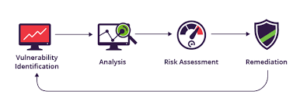
Windows VACA Checklist and Observations
Operating System Patch Management
One of the primary checkpoints during Windows VACA is verifying that systems are updated with the latest security patches. Missing cumulative updates, outdated .NET frameworks, and legacy SMB configurations are commonly observed risks that may expose systems to known exploits.
User and Privilege Management
Reviewing local administrator memberships, inactive privileged accounts, and service accounts with excessive permissions is critical. Enforcing least privilege and validating password policies such as complexity, lockout threshold, and password aging helps reduce privilege escalation risks.
Service and Port Exposure
Unnecessary services such as SMBv1, legacy remote management protocols, and unused application services must be disabled. Open ports related to RDP, SMB, and WinRM are validated to ensure they are restricted through firewall rules and network segmentation.
Security Configuration and Hardening
Windows Defender status, endpoint protection coverage, secure registry configurations, and audit policy settings are reviewed. Special attention is given to logging policies, ensuring account logon events, privilege use, and system changes are properly captured.
Authentication and Remote Access
RDP exposure is assessed for Network Level Authentication enforcement, brute-force protection, and MFA implementation where applicable. Cached credentials and stored secrets are also reviewed during configuration audits.
RHEL VACA Checklist and Observations
Patch and Package Management
RHEL systems are validated for outdated packages, kernel vulnerabilities, and unsupported repositories. Package integrity and timely patch deployment are essential to minimize exposure to publicly available exploits.
User Accounts and Sudo Privileges
Inactive users, unnecessary sudo privileges, and weak password configurations are frequently identified risks. Ensuring proper sudo logging and restricting root access through direct login controls significantly strengthens system security.
Service Hardening and Port Control
Running services are reviewed using process and socket analysis to identify unnecessary daemons. SSH configuration is validated for secure ciphers, root login restrictions, idle timeout enforcement, and key-based authentication.
File Permissions and Sensitive Data Exposure
Critical configuration files, SSH keys, backup archives, and log directories are assessed for improper permissions. World-writable files and exposed credential files are common findings during audits.
Logging and Monitoring
Audit logging, syslog configuration, and centralized log forwarding are verified to ensure traceability and incident investigation readiness. Time synchronization is also validated to maintain accurate event correlation.
Firewall and Network Controls
Host-based firewall configurations are reviewed to confirm that only required ports are exposed. Segmentation alignment with organizational network security policies is an important validation step.
Key Learning from My VACA Journey
The most important realization during this journey is that misconfiguration often presents greater risk than missing patches. Excessive privileges, weak logging visibility, and unnecessary service exposure consistently create exploitable attack paths even in fully patched systems.
Another critical learning is the importance of authenticated assessments and manual validation.
Automated scanners provide visibility, but real security improvement comes from configuration verification, risk contextualization, and remediation prioritization.
Continuous validation, collaboration with system administrators, and mapping findings to business impact have helped me perform more effective and practical VACA assessments.
Conclusion
Performing VACA across Windows and RHEL environments using Nessus has provided strong visibility into real-world enterprise security gaps. The combination of vulnerability assessment and configuration auditing helps organizations move from reactive patching to proactive security hardening.